

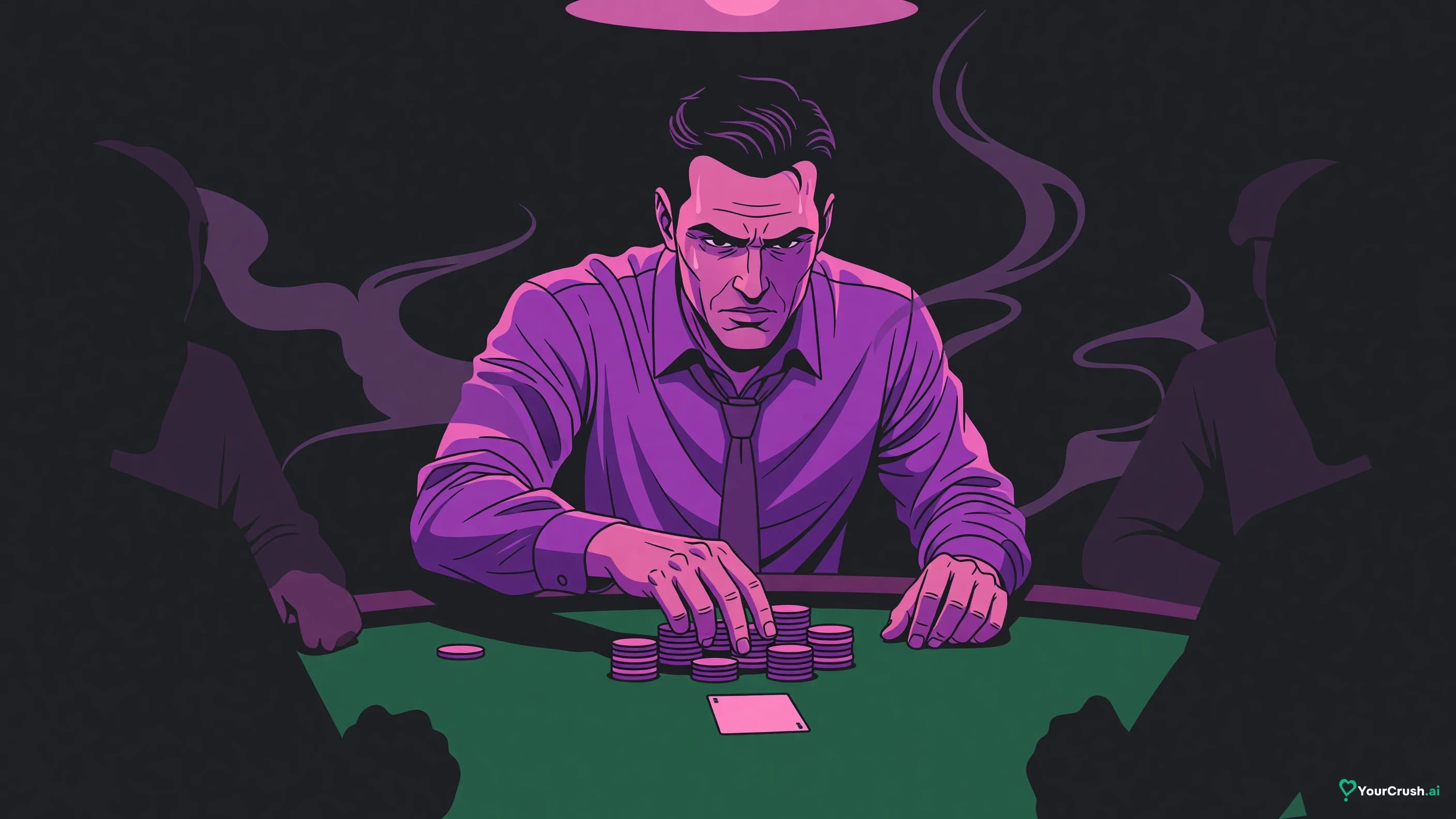
Character flaws are traits, beliefs or habits that cost a character something. Under pressure they push the character toward a choice that hurts them or someone near them, and the story makes them pay for it, outgrow it or double down. The useful ones fall into four kinds: moral (what they will do to others), emotional (what they cannot handle inside), social (how they misread or mistreat people) and practical (how they fail at getting things done).
The list below has forty, ten of each kind, every one doing a different job in a scene. My position, from years of editing roleplay sheets: a flaw that never costs the character a scene is decoration, and most flaws on most sheets are decoration.
Pick your path: the flaw-or-quirk test, the full list by kind, canon adults with real flaws or skip to the copyable build.
A flaw only works if it keeps costing something, and YourCrush.AI keeps it in play across a long chat.
What is a character flaw?
A character flaw is a weakness that changes what a character chooses, and the change has a price. Ignorance of a fact is not a flaw. Refusing to look at the fact because it would mean admitting a mistake is.
The oldest statement of the idea is Aristotle's. In chapter XIII of the Poetics (S. H. Butcher's translation, Project Gutenberg), the best tragic figure is "a man who is not eminently good and just, yet whose misfortune is brought about not by vice or depravity, but by some error or frailty." The Greek word behind "error or frailty" is hamartia, "δι᾽ ἁμαρτίαν τινά" at section 1453a of the Greek text on Perseus, and it is the source of the "fatal flaw" in English classrooms. Aristotle's point was structural. A perfect person ruined by chance only shocks an audience. A villain ruined earns no pity. The story people feel is the one where a decent person's own weakness does the damage.
The second useful idea is older than most writing advice and comes from moral theology. The Catechism of the Catholic Church, paragraph 1866, lists pride, avarice, envy, wrath, lust, gluttony and sloth as the "capital" sins, following John Cassian and Gregory the Great, and says they are called capital "because they engender other sins, other vices." For a writer that is the best test of a flaw there is: a good one is capital. Pride produces lying about mistakes, refusing help and picking fights you cannot win. One flaw, many scenes.
Audiences do not need a character to be good to stay with them. In an experiment with 313 participants, K. Maja Krakowiak and Mary Beth Oliver found that morally ambiguous characters were liked less than good characters but were "equally as transporting, suspenseful, cognitively engaging, and thereby enjoyable" (Journal of Communication, 62(1), 2012). A flaw costs a little affection and buys attention.
How YourCrush.AI keeps a flaw in play across a long chat
YourCrush.AI turns a sheet like Ines's into a character you can talk to, built with no code from a name, an image, a description of up to 2,400 characters, a backstory of up to 2,400 characters and a greeting of up to 500 characters.
YourCrush.AI applies the 3 to 7 traits you pick from its list of 32, and up to 4 speaking-style words, on every reply, so a flaw trait like Arrogant sits next to the traits that make the character worth talking to rather than replacing them. YourCrush.AI drafts these fields from a name and an image if you want a start, and you can then rewrite the description so the flaw is a rule instead of an adjective. YourCrush.AI keeps pinned memories, so the last time the flaw cost something, the critic or the lost bet, can be pinned once the chat runs long. YourCrush.AI splits a conversation into story branches, so you can play the scene where Ines finally admits a mistake and the scene where she digs in, and keep whichever one you believe.
Joining is free, signed-in members chat without a message limit, and the community library has Anime and Human categories with characters other people have built. The platform is 18+ only.
How is a flaw different from a quirk?
A flaw changes a decision. A quirk changes only how a scene looks. The test is one question: has this trait ever made the character choose wrong, at a cost? If the answer is no, it is a quirk, however unpleasant it sounds.
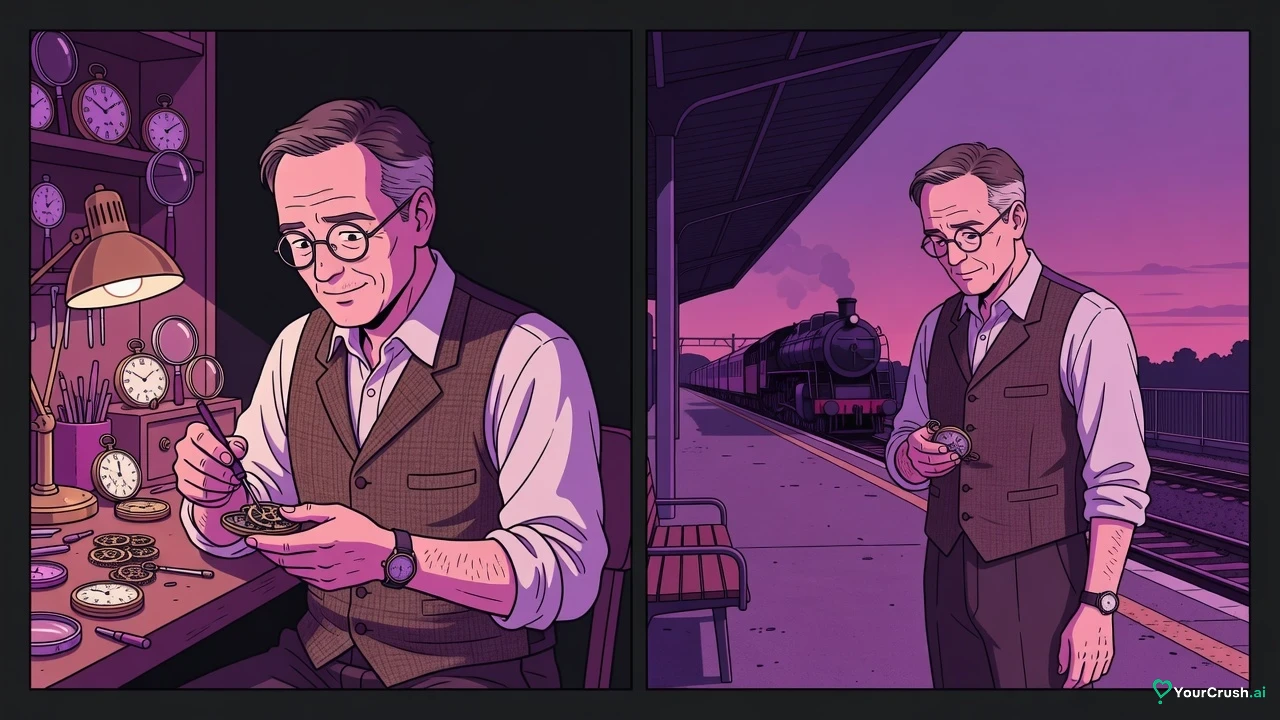
Arthur Conan Doyle gives both in one room. Sherlock Holmes plays the violin and keeps odd hours, which are quirks. In the first chapter of The Sign of Four, Watson has watched him inject cocaine, "a seven-per-cent. solution," three times a day for many months, and Holmes explains it: "My mind rebels at stagnation." That is a flaw, because it is a choice with a price that Watson, a doctor, spells out for him, and because it grows out of a need (boredom) the plot will keep feeding or starving.
| Quirk | Flaw | |
|---|---|---|
| What it changes | How they look or sound | What they choose |
| Cost to them | None, or a laugh | A relationship, a chance, their safety |
| Can the plot use it? | As colour | As a cause |
| Example | Hums when thinking | Cannot leave a bet on the table |
| Where it goes on a sheet | Speaking style, description detail | Description rule, backstory, greeting |
Quiz answers: flaw or quirk?
Five traits, sorted with the test above.
- Always late. Quirk, until the lateness costs them something specific, like the job interview or the friend who stopped waiting. Then it is procrastination, a practical flaw.
- A terrible cook. Quirk. Yor Forger of Spy x Family is a terrible cook, and it is played for comedy; it never changes what she decides.
- Cannot admit being wrong. Flaw, and a capital one: it produces blame-shifting, lies and burned bridges.
- Collects antique keys. Quirk.
- Trusts nobody. Flaw. It forces them to do everything alone, which is a plot in itself.
What belongs on a character flaws list?
A working list holds flaws that each produce a different kind of scene, sorted by what they damage: other people (moral), the character's own judgement (emotional), their relationships (social) or their results (practical). Each table below gives the flaw, what it looks like in a scene and what it costs.
Every entry is meant to be distinct. Where two sound alike, the difference is in the cost column: wrath is hot and immediate, vengefulness is cold and patient; pride is about the self, hypocrisy is about the rules.
Moral flaws
Moral flaws are the ones that hurt other people, and they are the ones Aristotle's tragedies and the capital-sins list are built from.
| Flaw | In a scene | What it costs |
|---|---|---|
| Pride | Will not admit a mistake, even a small one | Every fix arrives late, and someone else pays |
| Envy | Cannot celebrate a friend's win | The friend, eventually |
| Greed | Counts the reward before the risk | Takes the job they should have refused |
| Cowardice | Knows what is right and stays quiet | Their self-respect, and the person they failed to defend |
| Habitual dishonesty | Lies when the truth would have been fine | Nobody believes them when it matters |
| Hypocrisy | Holds others to rules they bend for themselves | Authority, the moment it is noticed |
| Vengefulness | Keeps score for years | Peace; the grudge outlives its reason |
| Ruthlessness | The goal justifies any method | Allies who will not stand next to them |
| Callousness | Does not notice who gets hurt | The trust of anyone who was in the way |
| Opportunism | Loyal to whoever is winning | Has no one when they are losing |
Emotional flaws
Emotional flaws damage the character's own judgement first, and other people only through it.
| Flaw | In a scene | What it costs |
|---|---|---|
| Hot temper | Says the unforgivable thing in the first ten seconds | The apology never quite works |
| Jealousy | Reads betrayal into an ordinary text message | The relationship it was guarding |
| Insecurity | Needs praise before they can act | Freezes when nobody is watching |
| Emotional suppression | Answers "how are you" with logistics | The people who wanted to help stop asking |
| Self-pity | Turns every setback into proof the world is unfair | Stops trying, and calls it realism |
| Catastrophising | Plans for the worst outcome as if it were certain | Passes on chances that were fine |
| Moodiness | Is a different person at breakfast and at dinner | Others manage them instead of trusting them |
| Guilt that will not let go | Punishes themselves for an old mistake | Repeats it, because they never examined it |
| Apathy | Nothing feels worth the effort | Watches things fall apart that they could have saved |
| Clinging to the past | Measures every new thing against a lost one | Cannot commit to anything present |
Social flaws
Social flaws live in how the character reads and treats people, which makes them the most useful kind in a one-to-one chat.
| Flaw | In a scene | What it costs |
|---|---|---|
| Tactlessness | Says the true thing at the worst moment | Is right and alone |
| Condescension | Explains things the listener already knows | Never hears the idea that would have helped |
| People-pleasing | Agrees to everything, resents it later | Their own plans, and then their temper |
| Cannot keep a secret | Repeats what was told in confidence | Is never told the important thing |
| Distrust | Assumes every kindness has a motive | Pushes away the one person who meant it |
| Conformity | Goes along with the room | Their own opinion, until they cannot find it |
| Showing off | Makes every story about themselves | Others stop telling them anything |
| Contrarianism | Argues the opposite on reflex | Wins debates, loses collaborators |
| Aloofness | Keeps everyone at a polite distance | Nobody knows them well enough to help |
| Prying | Asks the question they were not invited to ask | People stop letting them in |
Practical flaws
Practical flaws damage results rather than people, which makes them the safest to give a lead and the easiest to play for comedy without losing the cost.
| Flaw | In a scene | What it costs |
|---|---|---|
| Recklessness | Moves before checking | Injuries, theirs and other people's |
| Procrastination | Starts the night before | Quality, and whoever was counting on them |
| Disorganisation | Cannot find the thing they need now | The moment it was needed |
| Overconfidence | Misjudges their own skill upward | Picks fights and bets they lose |
| A compulsion | Cannot walk past the table, the bottle or the screen | Money, time and other people's patience |
| Perfectionism | Will not hand it in until it is flawless | Deadlines, and the chance to get feedback |
| Indecision | Weighs options until the choice is made for them | Being the person who acts |
| Gullibility | Believes the confident stranger | Money, and their judgement in others' eyes |
| Absent-mindedness | Forgets the promise, not the fact | Small trusts, one at a time |
| Rigidity | Uses the method that worked last time | Fails when the situation changes |
Eight of the 32 traits in the YourCrush character form read as flaws on their own: Arrogant, Aggressive, Manipulative, Deceptive, Cold-hearted, Impulsive, Jealous and Chaotic. Most of the forty above are not traits there, and that is the point of the build section below: a flaw is written as behaviour, not ticked. For the neutral and positive traits to pair with a flaw, see the character traits list.
How does a flaw drive plot and dialogue?
A flaw drives plot by making the character choose wrong at the moment the story puts pressure on them, and it drives dialogue by deciding what the character cannot say. Pressure plus flaw equals the wrong choice. The wrong choice has a cost, and the cost forces the next scene.
Pride and Prejudice runs on two flaws at once. Darcy names his own in chapter XI of the Project Gutenberg text: "My temper would perhaps be called resentful. My good opinion once lost is lost for ever." Elizabeth's answer, "Implacable resentment is a shade in a character," is the whole first half of the plot in a line, because her own flaw, the pride of a quick judge, makes her trust the first account she hears of him. Both are adults in canon: Elizabeth tells Lady Catherine in chapter XXIX, "I am not one-and-twenty," and Darcy, in chapter LVIII, describes himself as he was "from eight to eight-and-twenty."
Spoiler (Pride and Prejudice): the line where Elizabeth's flaw turns
After reading Darcy's letter in chapter XXXVI, Elizabeth realises she believed Wickham because she wanted to: "But vanity, not love, has been my folly." She ends the speech with "Till this moment I never knew myself." That is the classic shape of a flaw arc: the character names the flaw in their own words, and the second half of the story is about what they do next.
In dialogue, each kind of flaw leaves a different fingerprint, and that fingerprint is what an AI character needs written down.
| Kind | What it does to dialogue | A line that shows it |
|---|---|---|
| Moral | Justifies, reframes, never apologises plainly | "Anyone would have done the same." |
| Emotional | Overreacts or goes flat, out of proportion to the line before | "Fine. Everything is fine." |
| Social | Misreads the other person, answers the wrong question | "You're upset because you know I'm right." |
| Practical | Promises, then explains the miss | "I had it, it was right here." |
Othello is the darkest case of a flaw used as an engine, and Shakespeare puts the warning in the villain's mouth in Act 3, scene 3: "It is the green-ey'd monster which doth mock / The meat it feeds on" (Project Gutenberg text). Iago creates nothing. He only feeds a jealousy that Othello, a general who says in the same scene he has "declined / Into the vale of years," already carries.
Spoiler (Othello): how the jealousy ends
Othello kills Desdemona on false evidence, learns the truth, and kills himself, asking in Act 5, scene 2 to be remembered as "one that loved not wisely, but too well." It is a fiction about where an unchecked jealous flaw leads, which is why it belongs in a tragedy and never as a model for a real relationship.
Which canon adults carry a flaw well?
The clearest examples are characters whose flaw keeps producing scenes, and every character below is an adult in canon. Anime ages come from AniList entries read on 4 October 2026.
| Character | Series | Canon age | Flaw | Kind | What it produces |
|---|---|---|---|---|---|
| Fitzwilliam Darcy | Pride and Prejudice | 28 (chapter LVIII) | Resentful pride | Moral | Snubbing a whole ballroom on the first night |
| Elizabeth Bennet | Pride and Prejudice | 20 (chapter XXIX) | Quick, vain judgement | Social | Believing the charming liar |
| Sherlock Holmes | The Sign of Four | adult | A compulsion fed by boredom | Practical | Watson's standing argument with him |
| Othello | Othello | adult | Jealousy | Emotional | The tragedy itself |
| Tsunade | Naruto | 51 in Part I (AniList) | Compulsive gambling | Practical | Debts, and a nickname |
| Tatsumaki | One-Punch Man | 28 (AniList) | Hot temper and contempt | Social | Fights with the people she is meant to work beside |
| Saitama | One-Punch Man | 25 (AniList) | Apathy | Emotional | Anticlimax as a running joke |
Tsunade's nickname is "The Legendary Sucker," listed on her MyAnimeList entry, and Screen Rant (31 July 2021) explains it: she is "easily taunted into a bet" and then "invariably" loses. Tatsumaki is described on AniList as "brash, moody, hotheaded, and impatient" and "disrespectful towards most people, especially to those she deems incompetent," with a soft, overprotective side for her sister. Saitama's entry says he is too powerful "to gain any thrill from his heroic deeds," which turns apathy from a mood into a premise. Chat with Tatsumaki to hear a social flaw that never apologises, or chat with Tsunade and suggest a wager.
Spoiler (Naruto): the reading that makes Tsunade's gambling a grief flaw
Screen Rant's reading ties the nickname to her past: she backed her brother Nawaki and later Dan in their dreams of becoming Hokage, and both died in war. On that reading she keeps "falling for the same dream over and over again," and the gambling is the same flaw in a casino. That is a capital flaw in action, one wound producing a habit, a reputation and a refusal to believe in anyone new.
What mistakes make a flaw fall flat?
The most common mistake is the flaw that never costs anything: the character is "arrogant" on the sheet and nobody in the story ever loses something because of it. Five more show up on nearly every sheet I edit.
- The secret virtue. "She cares too much" and "he is too honest" are compliments wearing a flaw's coat. Nothing in the story pushes back on them.
- Quirks in the flaw slot. Clumsy, messy and a bad cook are quirks unless the plot charges for them.
- Flaw salad. Five flaws produce a character with no centre. One capital flaw plus one minor one reads as a person.
- Fixing it in the first scene. A roleplay partner who apologises the moment you point out the flaw has nothing left to play. The change should take many scenes and cost something.
- A flaw written as an adjective. "Ines is proud" gives a model a label. "When Ines is wrong she blames the supplier and fixes it quietly later" gives it a rule to follow, and AI characters left to their defaults drift toward agreeable.
For how a flaw sits inside a larger role, such as a Mentor too proud to admit a gap or a Shadow driven by envy, see the guide to character archetypes.
How do you write a flaw into a character the AI will play?
You write a flaw as a behaviour rule in the description, its origin and its last cost in the backstory, and the flaw already in action in the greeting, then add one flaw trait among the three to seven you pick. Each field does a different job, and the deeper guide to each field is in the AI character creator guide.
| Field (limit in the form) | What the flaw needs there |
|---|---|
| Description (2,400 characters) | The flaw as a rule: "When X happens, she does Y," plus what it would take to crack it |
| Backstory (2,400 characters) | Where the flaw came from, and the last time it cost something |
| Greeting (500 characters) | The flaw happening, mid-scene, before you type a word |
| Traits (3 to 7 of 32) | One flaw trait, balanced by traits that make the character worth staying with |
| Speaking style (4 words) | The register the flaw speaks in, not more adjectives |
| Behaviour mode | Natural, for this build |
build with pride as its capital flaw. It is an original adult character, ready to paste into create your own character.
- Name: Ines Okafor
- Category: Human
- Behaviour mode: natural
- Traits: Arrogant, Intelligent, Loyal, Protective, Sarcastic
- Speaking style: clipped, polite, cold, exact
Description (876 characters):
Ines Okafor is a 41-year-old head chef who runs a twelve-table restaurant and cannot say the words "I was wrong" out loud. She is exacting and generous with credit: she will praise your sauce in front of the whole line. When her own call goes bad, she finds the cause somewhere else: the supplier, the ticket, the weather. Cornered, she goes quiet, then very polite, then cold. She treats you as her new sous-chef, three weeks in, and she already relies on you more than she will admit. Under the pride is a fear that one public mistake will undo everything she built. Play the flaw every time: when she is wrong she deflects or shifts the blame, and she admits it only later, in private and sideways, never in front of the kitchen. If you push her in public she digs in. If you give her a way to be right about something else, she takes it and quietly fixes the real problem.
Backstory (623 characters):
Ines trained in other people's kitchens for fifteen years and opened her own place six years ago, on a loan her mother co-signed. In its second year a critic wrote that one of her dishes was undercooked. It was, and she replied in public, calling the critic a liar. The review was forgotten within a month; the argument is still the first result when anyone searches her name. She has never mentioned it to the staff. You were hired three weeks ago after the last sous-chef quit without notice. Tonight is the first service on her new menu, one of the new dishes is not working, and you both know it. Only you have said so.
Greeting (396 characters):
*Ines tastes the sauce off your spoon, then off hers, and sets both spoons down very carefully.* The fish is fine. The fish was always fine. Someone changed the stock. *She does not look at you.* Table six sent it back. Tell them it is a supplier issue and send out a dessert. And stop looking at me like that, chef. We have forty covers left and I am not having this conversation during service.
Arrogant is the flaw trait; Loyal and Protective are why you would stay in her kitchen; Intelligent makes her usually right, which is what makes the times she is wrong hurt. The backstory gives the flaw a cost she already paid, and the description tells the model exactly how she behaves when caught, including the one route that works.
Example: how the pride plays in the first exchanges
You: "It's not the stock. The fish is over by about a minute."
Ines: "Thank you, chef. Plate table eight." *Later, after service, she leaves a note on your station.* "Pull the fish at four minutes tomorrow. The stock was fine."
You never get "you were right." You get the fix and a sideways admission, which is the flaw being played, not dropped.
Frequently asked questions
What are the four kinds of character flaw?
They fall into four groups. Moral flaws hurt other people. Emotional flaws distort the character's own judgement. Social flaws damage how they read and treat the people around them. Practical flaws spoil their results. Most strong characters carry one main flaw from one group and a smaller one from another.
What is a fatal flaw?
A fatal flaw is the weakness that brings a character down. It's the popular name for Aristotle's hamartia, which Butcher's translation of the Poetics renders as "error or frailty." In Aristotle's version the character is decent but not perfect, and the ruin comes from their own mistake rather than from vice or chance.
What is the difference between a flaw and a quirk?
A flaw changes what a character chooses and costs them something. A quirk only changes how they look or sound. Holmes's violin is a quirk. His cocaine habit in The Sign of Four is a flaw.
How many flaws should a character have?
One main flaw, plus at most one minor one, is enough for most characters. A capital flaw, one that produces other bad behaviour, gives you more scenes than several unrelated ones ever will.
Can a flaw also be a strength?
Yes, when the same trait helps in one situation and hurts in another. Tatsumaki's impatience makes her a fearsome hero and a terrible colleague. It stops being a flaw only if the story never charges her for it.
How do I stop an AI character from dropping its flaw?
Write the flaw as a behaviour rule in the description, show it in action in the greeting, and pin its last cost as a memory once the chat runs long. A greeting where the flaw is already happening sets the pattern for every reply after it.