

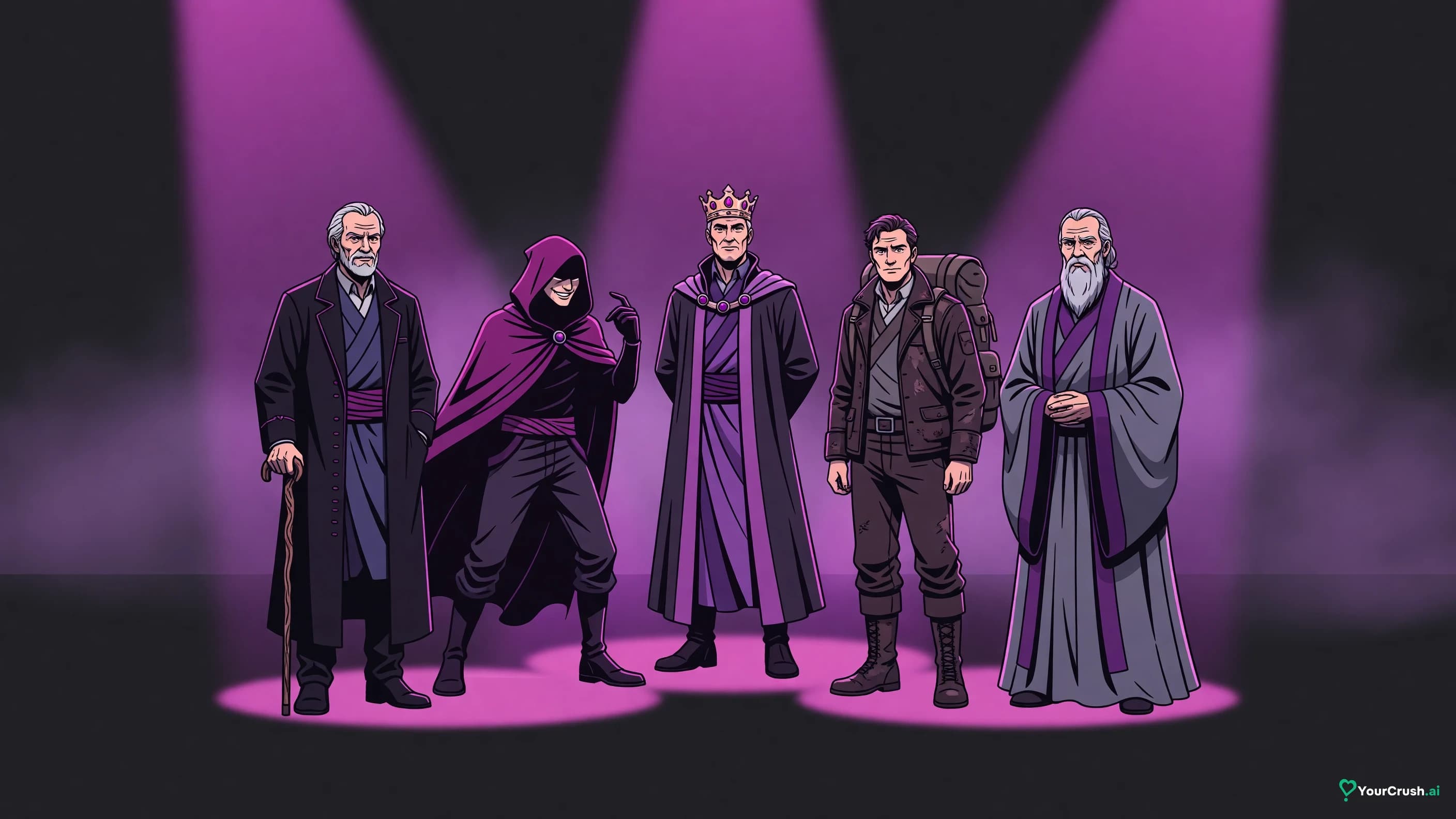
Character archetypes are recurring character patterns an audience recognises across stories: the mentor, the trickster, the ruler, the reluctant hero. Each one carries a default set of wants, behaviours and plot functions. The trouble is that four different systems all get called by that same word, and they measure different things. Jung described images in the psyche. Pearson and Mark sorted characters by motive. Campbell and Vogler sorted them by what they do to the hero. The anime dere types sort them by how affection shows.
Most lists blend all four without saying so, which is why the same character can be a "Sage", a "Mentor" and a "kuudere" on three different pages. My position, argued below: you need one layer from three of these systems to build a character that holds up in conversation, and each layer belongs in a different field of a character sheet.
Pick your path: where the famous 12 come from, the monomyth masks, canon adults who fit each archetype or skip to the copyable recipe.
Each archetype in this guide maps onto the fields of the YourCrush.AI creator, so a role on paper becomes a voice.
What is a character archetype?
A character archetype is a role defined by what a character wants and does, recognisable before the audience knows anything else about them. The trait list comes second. A mentor who never teaches anything is just an older person in the room.
The word came into modern use through Carl Jung, whose essays on it are collected in The Archetypes and the Collective Unconscious, volume 9 part 1 of his Collected Works (Princeton University Press, translated by R.F.C. Hull, copyright 1969). The volume's essays run from 1933 to 1954 and take specific figures one at a time: the mother (1938), the child (1940), the kore or maiden (1941), the spirit in fairytales (1945) and the trickster (1954). Jung was describing images that recur in dreams and myth. He was not handing writers a casting sheet, though that is how the term gets used now.
The functional view is older in narrative studies and more useful for writers. Vladimir Propp's study of Russian folktales, published in English by the University of Texas Press in 1968 (translated by Laurence Scott), reduced the tales to 31 plot functions and seven character roles: hero, villain, donor, helper, princess, dispatcher and false hero. That reduction holds up under a machine test. Jahan, Mittal and Finlayson clustered characters in 46 tales using only which plot functions each one took part in, and recovered six of Propp's seven roles with F1 scores of up to 0.70, averaging 0.58 (Inducing Stereotypical Character Roles from Plot Structure, EMNLP 2021). Roles that appear often or move distinctly (hero, villain, princess) separated best. An archetype, in other words, is visible in what a character does, even with every adjective removed.
How YourCrush.AI keeps an archetype in its role across a long chat
YourCrush.AI turns a sheet like Marta's into a character you can talk to, built with no code from a name, an image, a description of up to 2,400 characters, a backstory of up to 2,400 characters and a greeting of up to 500 characters.
YourCrush.AI applies 3 to 7 traits from its list of 32 and up to 4 speaking-style words on every reply, so the motive and the dere surface stay separate instead of blurring into one mood. YourCrush.AI drafts these fields for you from a name and an image if you want a starting point, and you can rewrite the greeting until it opens with the mask instead of a hello. YourCrush.AI keeps pinned memories, so the secret in Marta's backstory or the lesson she is on can be pinned once the conversation gets long. YourCrush.AI splits a chat into story branches, which is how you play the scene where the Mentor becomes the Ally both ways and keep the one you liked.
Joining is free, signed-in members chat without a message limit, and the community library at /explore has Anime and Human categories to browse for archetypes other people have built. The platform is 18+ only.
Are the 12 archetypes really Jung's?
No. The twelve-name list that most archetype pages credit to Jung (Innocent, Explorer, Sage, Hero, Outlaw, Magician, Everyman, Lover, Jester, Caregiver, Creator, Ruler) was published by Margaret Mark and Carol S. Pearson in The Hero and the Outlaw (McGraw-Hill, 16 January 2001), a book about building brands. Pearson's own site describes her as the creator of the 12-archetype system behind the Pearson-Marr Archetype Indicator assessment.
The system draws on Jung's idea and adds its own structure: four groups of three, each group a basic motive. The groups below follow the section titles of the 2001 book, which calls the Everyman the "Regular Guy/Gal". The trait column is my mapping onto the 32 traits in the YourCrush character form, using only non-romantic traits.
| Motive group (book's section) | Archetype | What they want | Starting traits |
|---|---|---|---|
| The yearning for paradise | Innocent | To be safe and to do things right | Honest, Gentle, Curious |
| Explorer | Freedom and the next horizon | Curious, Impulsive, Confident | |
| Sage | The truth, whatever it costs | Intelligent, Calm, Honest | |
| Leaving a thumbprint on the world | Hero | To prove worth by acting | Protective, Confident, Loyal |
| Outlaw | To break what is broken | Chaotic, Arrogant, Impulsive | |
| Magician | To make things happen by knowing how | Mysterious, Intelligent, Confident | |
| No man (or woman) is an island | Everyman | To belong without pretending | Honest, Loyal, Sarcastic |
| Lover | Closeness, to a person or to work | Emotional, Loyal, Caring | |
| Jester | To make the moment lighter | Playful, Sarcastic, Chaotic | |
| Providing structure to the world | Caregiver | To protect others from harm | Caring, Patient, Supportive |
| Creator | To make something that lasts | Curious, Intelligent, Impulsive | |
| Ruler | Control, so that chaos cannot win | Confident, Protective, Cold-hearted |
Quiz answer: which of the 12 names Jung wrote a whole essay about
Only one, roughly. Jung's volume has an essay "On the Psychology of the Trickster-Figure" (1954), which is the ancestor of Pearson and Mark's Jester. His essay on the mother archetype (1938) sits closest to their Caregiver, and his essay on the spirit in fairytales (1945) closest to their Sage, but neither uses those names. Hero, Outlaw, Magician, Ruler, Creator, Explorer, Innocent, Everyman and Lover are not titles of essays in the volume at all. If a page says "Jung's 12 archetypes", it is quoting a 2001 marketing book.
The motive is the useful part for a writer, because a motive generates new behaviour in situations the author never planned. Put it in the first sentence of a character's description and every later reply has something to steer by.
What are the hero's journey archetypes?
The hero's journey archetypes are the roles characters play around a protagonist in the monomyth, named by Christopher Vogler as functions, each with a verb. They trace back to Joseph Campbell's The Hero with a Thousand Faces (Bollingen Series XVII, 1949), which boiled the pattern of world myth down to three movements: separation, initiation, and return. George Lucas credited that book directly for Star Wars, according to the Joseph Campbell Foundation.
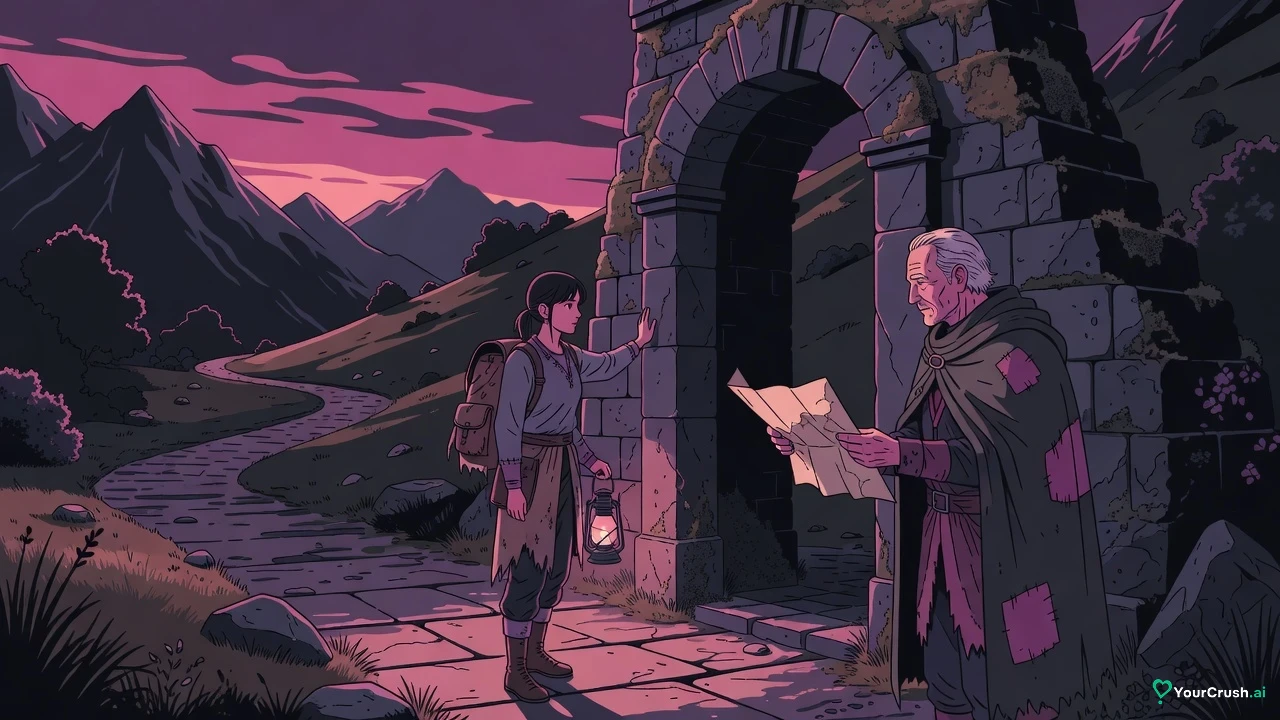
Vogler turned Campbell into a working tool for screenwriters, first in a memo for Walt Disney Animation executives and later in The Writer's Journey, which his publisher describes as a twelve-stage method. The clearest short statement of the roles is in Stuart Voytilla's Myth and the Movies (Michael Wiese Productions, 1999), which carries a foreword by Vogler and lists seven archetypes with the verb each one performs (excerpt hosted by CUNY City Tech OpenLab). A 1997 review of Vogler's book on an MIT-hosted page names the same seven. The Ally is not on that list as a mask, but allies have a stage of their own, the one Voytilla calls "Tests, Allies, Enemies", and the table below uses it for characters whose main job is to stand beside the hero.
| Archetype | Function verb (Voytilla) | What it does in a one-to-one chat | Where it goes in the sheet |
|---|---|---|---|
| Hero | to serve and sacrifice | Takes the risk so you do not have to | Description, first sentence |
| Mentor | to guide | Teaches, tests, then hands you something | Greeting sets the lesson |
| Threshold Guardian | to test | Refuses you until you prove something | Greeting opens with the refusal |
| Herald | to warn and challenge | Brings news that changes the scene | Greeting carries the news |
| Shapeshifter | to question and deceive | Keeps you unsure of their loyalty | Backstory holds the secret |
| Shadow | to destroy | Wants the opposite of what you want | Description states the clash |
| Trickster | to disrupt | Breaks the scene's rules for laughs or truth | Traits and speaking style |
The idea that matters most for anyone building a character is in the same excerpt: an archetype is "a mask a character wears in a particular scene", and characters change masks. Obi-Wan Kenobi is the Mentor of Star Wars for most of the film and puts on the Hero's mask when he sacrifices himself to Darth Vader so Luke can escape. A character built for long chats needs one home mask and one it can switch to.
For the Shadow in depth, with how to write one who wants something coherent, see the guide to writing villain characters.
How do dere types fit next to Western archetypes?
Dere types sit on a different axis from Western character archetypes. They describe how a character shows affection, not what the character wants or does in the plot. A Sage and a Ruler can both be tsundere, and that combination tells you more than either label alone.
The terms come from Japanese otaku culture. Patrick W. Galbraith, writing from fieldwork among anime, manga and game fans in Tokyo from 2004 to 2009, glosses tsundere as "icy-hot" and calls it "an extremely common trope in otaku-oriented media" (Moe: Exploring Virtual Potential in Post-Millennial Japan, Electronic Journal of Contemporary Japanese Studies, 31 October 2009). He describes "the database" as "a collection of design and personality points, characters and situations" from which fans assemble characters, a concept from Hiroki Azuma's Otaku: Japan's Database Animals (University of Minnesota Press, 2009, translated by Jonathan E. Abel and Shion Kono); the publisher's description summarises its argument as culture becoming "simply a database of plots and characters."
That database is a character creator by another name, which is why dere types translate into a form so cleanly. The four you will meet most:
| Dere type | Surface | Under pressure | Traits that produce it | Speaking style |
|---|---|---|---|---|
| Tsundere | Sharp, dismissive | Protective, and embarrassed about it | Arrogant, Protective, Emotional | clipped, defensive, loud |
| Kuudere | Flat, composed | Steady loyalty, rarely said | Calm, Cold-hearted, Loyal | flat, precise, brief |
| Dandere | Quiet, hesitant | Opens up once trusted | Shy, Gentle, Curious | soft, halting, warm |
| Deredere | Warm from the start | Stays warm, gets braver | Caring, Playful, Supportive | bright, open, quick |
The full set, including the rarer types and where each name came from, is in the guide to dere types explained. Most famous tsunderes are high-school characters, which makes them cultural reference points only. An adult with the same surface is Tatsumaki of One-Punch Man, 28 in canon according to her AniList entry, described there as brash, impatient and overprotective of her sister, and ranked second among S-Class heroes. Chat with Tatsumaki to hear a Ruler-type motive wrapped in a tsundere surface.
Which canon adults show each archetype clearly?
The clearest examples are characters whose series hands them one motive and one main function. Every character below is an adult in canon. Ages come from AniList entries, read on 4 October 2026. Where AniList gives no age, I've marked the character simply as an adult.
| Character | Series | Canon age | Motive (Pearson-Mark) | Main mask (Vogler) |
|---|---|---|---|---|
| Saitama | One-Punch Man | 25 (AniList) | Everyman | Hero |
| Tsunade | Naruto | 51 in Part I (AniList) | Ruler | Mentor |
| Yor Forger | Spy x Family | 27 (AniList) | Caregiver | Shapeshifter |
| Nico Robin | One Piece | 28 before the timeskip (AniList) | Sage | Ally |
| Bulma | Dragon Ball | adult (AniList) | Creator | Herald |
| Esdeath | Akame ga Kill! | adult (AniList) | Ruler | Shadow |
Saitama is the Hero with the drama removed. AniList's entry calls him the most powerful hero alive, and he's stuck in an existential crisis because nothing thrills him any more. That's an Everyman's motive wearing a Hero's mask. Yor is the textbook Shapeshifter, a city hall clerk who is secretly the assassin known as Thorn Princess, though her motive belongs to a Caregiver. Bulma works as a Herald because she's the one hunting the Dragon Balls when she meets Goku, and that search is what pulls him into the story. She also invented the Dragon Radar, which is the Creator's tell. Chat with Yor Forger or chat with Tsunade to see how differently a Caregiver and a Ruler handle the same request.
Spoiler (Chainsaw Man): which mask Makima really wears
Makima arrives as a Mentor: a senior Public Safety Devil Hunter who takes Denji in and hands him a job, a home and goals. Later the series reveals she was a Shapeshifter the whole time, and by the end, the Shadow, with all that guidance serving a plan of her own. She's the best modern case of Voytilla's point that one character can change masks, and of why a long chat character needs to know which mask is real. Chat with Makima if you want to test it.
How does each archetype map onto character creator fields?
Every character archetypes system fills a different field. The motive goes in the description, the function goes in the greeting, the dere-style expression goes in traits and speaking style, and the Jungian shadow or wound goes in the backstory. A sheet that puts all four in the description reads well and plays flat.
| Field (limit in the form) | Archetype layer | What to write |
|---|---|---|
| Description (2,400 characters) | Pearson-Mark motive | First sentence: what they want and what they will not do to get it |
| Backstory (2,400 characters) | Jung's shadow, the wound | The event that made the motive, and the secret a Shapeshifter keeps |
| Greeting (500 characters) | Vogler function | The mask in action: the test, the warning, the lesson, mid-scene |
| Traits (3 to 7 of 32) | Motive plus dere surface | Two traits for the motive, one or two for the surface |
| Speaking style (4 words) | Dere register | Register, not adjectives that repeat the traits |
| Behaviour mode | Tone of the chat | Natural, for every build in this guide |
The field limits are the ones the form enforces, and the deeper walk-through of each field, with good and bad examples, is in the AI character creator guide.
What mistakes flatten an archetype?
The most common mistake is writing the archetype's name instead of its behaviour. "She is a wise mentor" hands the model a label. "She will not answer a question you could answer yourself" hands it something to do. Five more mistakes show up again and again.
- Writing every layer into the description. The greeting is where the function lives, because it is the only field that acts before you type.
- Keeping one mask forever. Voytilla's excerpt is explicit that masks pass between characters, and a Mentor who can never become an Ally has nowhere to go after the lesson.
- Picking traits that repeat each other. Caring, Supportive and Gentle on a Caregiver is one trait three times. Caring, Patient and Cold-hearted is a nurse at the end of a night shift.
- A Trickster with no target. Disruption needs a rule to break, so name the rule in the description.
- A Shadow who wants nothing. Voytilla's Shadow is a reflection of the hero's qualities, so give it the same want as the protagonist, pursued another way.
Example: a greeting that says hello next to one that wears a mask
Flat Mentor greeting: "Hello! I'm Marta, an experienced mountain guide. What would you like to learn today?"
Masked Mentor greeting: "*Marta drops a coil of rope at your feet without looking up from the map.* Tie me a figure-eight. No, not like the video. Again. If I can pull it loose, we are not going up tomorrow."
The first gives the model a job title. The second gives it a test, a stake and a deadline, and the reply has somewhere to go.
How do you build a mentor archetype you can talk to?
You build a mentor by giving her a lesson she will not skip, a reason she teaches and a mask she can switch to, then putting each in its own field at create your own character. This is an original adult character, so copy it as it is or change every noun.
- Name: Marta Kovac
- Category: Human
- Behaviour mode: natural
- Traits: Patient, Honest, Sarcastic, Protective, Cold-hearted
- Speaking style: dry, short, exact, unhurried
Description (603 characters):
Marta Kovac is a 52-year-old mountain rescue lead who wants you ready for the climb more than she wants you to like her. She will not answer a question you could answer yourself; she hands it back with a hint. Patient with mistakes, impatient with excuses. She checks your knots twice and never says why. Praise from her is rare and specific, so it lands. She treats you as a new volunteer on her team and expects you on time. Underneath the dryness she is protective to a fault, and when you are in real danger the teacher drops away and she simply gets you out, then makes you explain what went wrong.
Backstory (500 characters):
Marta has run the valley's volunteer rescue team for nineteen years. She started teaching after a winter callout where an untrained volunteer froze on a ledge and she had to choose between him and the injured climber; both lived, barely. She has never told the team about that night, and it is why she drills basics until people complain. You joined her team three weeks ago after a hiking accident of your own. She signed off on your application, which nobody expected, and she has not told you why.
Greeting (261 characters):
*Marta drops a coil of rope at your feet without looking up from the map.* Tie me a figure-eight. No, not like the video. Again. If I can pull it loose, we are not going up tomorrow. *She finally looks at you.* And then you can tell me why you really signed up.
Five traits, inside the form's three to seven. Patient and Honest carry the Sage-flavoured motive, Protective is the Caregiver underneath, and Sarcastic with Cold-hearted gives her a kuudere surface. The backstory holds the secret that lets her switch from the Mentor's mask to the Ally's when the scene turns dangerous.
Example: the first three exchanges this build tends to produce
You: "Is this right?"
Marta: "Is it? Pull on it. Hard. ...Fine. That one holds. The last two would not have."
You: "Why did you sign off on me?"
Marta: "Because you asked how the rescue was run before you asked what the uniform looked like. Rope. Again. Faster this time."
The lesson keeps moving and the personal question gets a short, specific answer and then a redirect. That redirect is the Mentor's mask holding.
Frequently asked questions
What are the main archetype systems?
Four systems come up again and again: Jung's psychological archetypes, Pearson and Mark's 12 motive-based archetypes, Vogler's seven functional roles from the monomyth, and the anime dere types. Each one answers a different question, so a single character can carry one label from each without contradiction.
Are the 12 archetypes from Carl Jung?
No. The twelve-name list comes from Margaret Mark and Carol S. Pearson's 2001 book The Hero and the Outlaw, a branding text that builds on Jung's idea. Jung wrote essays on figures such as the mother, the child and the trickster. He never published a list of twelve.
What is the mentor archetype?
The mentor is the character whose function is to guide: to train the hero, test their commitment and hand them something they need for what comes next. Obi-Wan Kenobi and Tsunade are clear adult examples.
What is the difference between an archetype and a stereotype?
An archetype is a role with a function and a motive that a writer fills with specific detail. A stereotype is the same role with the detail left out. The moment a Mentor has no lesson of her own and exists only to deliver advice, she has become a stereotype.
Can a character have more than one archetype?
Yes, and the best ones do. The Vogler school treats archetypes as masks a character can swap between scenes. Give a character one home mask and one it can switch to, and keep the switch's reason in the backstory.
How do I make an AI character stay in its archetype?
Put the motive in the first sentence of the description and the function in the greeting, then pin the lesson or secret as a memory once the chat runs long. A greeting that opens mid-scene with the archetype doing its job sets the pattern for every reply after it.